
Clemson Arrest Records Span Agencies
Clemson counted 17,681 residents in the 2020 Census. Its arrest records still spread across three separate systems. The Clemson Police Department handles city matters, Clemson University Police covers campus incidents, and the Pickens County Sheriff’s Office or PCDC takes over when someone is transferred or held on a county charge. A hit in one system tells you nothing about the other two. Pin down the agency first, and the rest of the lookup gets far more accurate.
The city runs its own detention center. Clemson Police provides dispatch, detention, evidence, investigations, records, and victim services through its Support Services operation. That detail matters. A city arrest does not automatically flow into the Pickens County jail, so the county portal only helps when someone is known or reasonably believed to be in PCDC custody. The record holder, the place of custody, and the court can all be different entities.
These boundaries shape record requests too. A Clemson Police report goes through the city route. A Clemson University Police incident goes through the campus agency. A transfer or separate county matter can land someone in PCDC. The same name might appear in none, one, or several systems at different stages, so never merge results into one claimed booking history.
Clemson Busted Mugshot Sources
Clemson Police has not published a public city-jail roster. There is no daily booking log or booking-photo gallery either, and it lists no schedule for releasing one. Its annual reports and other selected material offer useful context, but they are not tools for finding current arrests. Start with official systems instead. The county search answers one narrow question, whether someone is in PCDC custody right now, and city or campus records have to come from the agency that holds them.
Unofficial sources appear only after the official ones. They can be incomplete, delayed, mismatched to the city, or stale. They cannot confirm current custody, a warrant, or a court result.
| Channel | Photo? | Official? | What it can answer |
|---|---|---|---|
| PCDC inmate portal | Interface includes a mugshot field | Yes | Current county custody, not a complete Clemson city or campus roster. |
| Clemson FOIA | Request only | Yes | Existing city-held records, subject to the FOIA process and exemptions. |
| CUPD Daily Crime Report | No booking-photo feed | Yes | Campus case information and disposition codes, not a jail list or court outcome. |
| Clemson Police Annual Reports | No | Yes | Historical department context, not an arrest roster. |
| WSNW News | Story-dependent | No | Regional incident reporting, not an official record source. |
| RecentlyBooked Pickens County | Publisher content | No | Unofficial county material that may be incomplete, delayed, or stale. |
Those secondary rows carry real limits. A Clemson tag does not prove municipal detention. An entry can linger online long after a release or a court change, too. For anything definitive, go to Clemson Police, the relevant campus agency, PCDC when it applies, and the court record holder.
Search a Busted Clemson Booking
First decide which agency acted. Was it the city, the campus, or the county? A location near the university alone won't tell you. The official PCDC portal allows a name search plus filters for in-custody status, arrest date, release date, sex, and held-for agency. Those fields can narrow a county result nicely. Just remember that an empty result does not rule out city detention, campus involvement, a release, or a delayed transfer.
- Identify the likely agency from the location, case information, or direct agency contact: Clemson Police, Clemson University Police, or county authorities.
- For possible current PCDC custody, use the official portal and review its available name, date, status, and agency filters.
- For a Clemson city record, request the existing report or booking-related material through the city’s records and FOIA route.
- For a campus incident, use the CUPD report as a case lead and contact the appropriate campus records route for more information.
- Use the court record for the later legal result. A booking item is not a final disposition.
The Pickens County lookup overview spells out the county portal’s fields and its current-custody limits. It should not be stretched to turn a city or university event into a county booking claim.
Clemson Police FOIA Records
The city’s incident-report request form asks for an incident date and case number. It states plainly that it is not a FOIA request. The form works well when you simply need an existing incident report that fits. For booking, arrest, or photo material, take the City of Clemson’s formal FOIA route instead. Describe the agency-held record as narrowly as you can.
The city's published material makes no promise about booking photos. There is no fixed photo fee either. A good request names the person, gives a date range, adds a case number when known, and describes the record plainly. Redactions and exemptions can still apply. This path covers city-held documents only. It builds no public city-jail roster and cannot reach county records.
Need just an existing incident report? If you have the incident date and case number, the non-FOIA form may fit that narrower job. Broader public records requests go the FOIA route. Neither path yields a general online list of people busted in Clemson. Neither reveals a court result.
Clemson Busted Mugshots and Detention
Clemson runs its own detention operation. The Clemson City Detention Center is licensed by South Carolina as a Level One jail and gets a state inspection twice a year. It holds people arrested by Clemson City Police, Clemson University Police, and at times the South Carolina Law Enforcement Division. That custody line matters. It explains why a Pickens County detention lookup cannot capture every Clemson arrest.
Figure out the agency before anything else. City detentions of short duration belong to Clemson Police Records, while a campus incident may sit with university police. Some people do transfer to county custody later, but the city publishes no fixed schedule and promises nothing about when a name might show up anywhere. Expect no timing guarantees from any portal.
Knowing where an event happened shapes where to look. Someone with only a vague sense that something occurred in Clemson should pin down first whether city, campus, or county officers handled it. Then take the date and case details to that record holder directly.
Note: A county search with no result can still coexist with a real city or campus event, and it does not settle anyone's custody status.
Clemson Campus Crime Records and Busted Bookings
Campus incidents leave their own paper trail. The Clemson University Police Daily Crime Report lists each case number, the offense, reported and incident dates with times, the location, and disposition codes. That helps when a city matter and a university matter might blur together. It is not a booking-photo feed. It is not a detention roster.
Want a wider lens? The Clemson Police Annual Reports summarize department activity year by year. They describe trends and workload, not any single person's record.
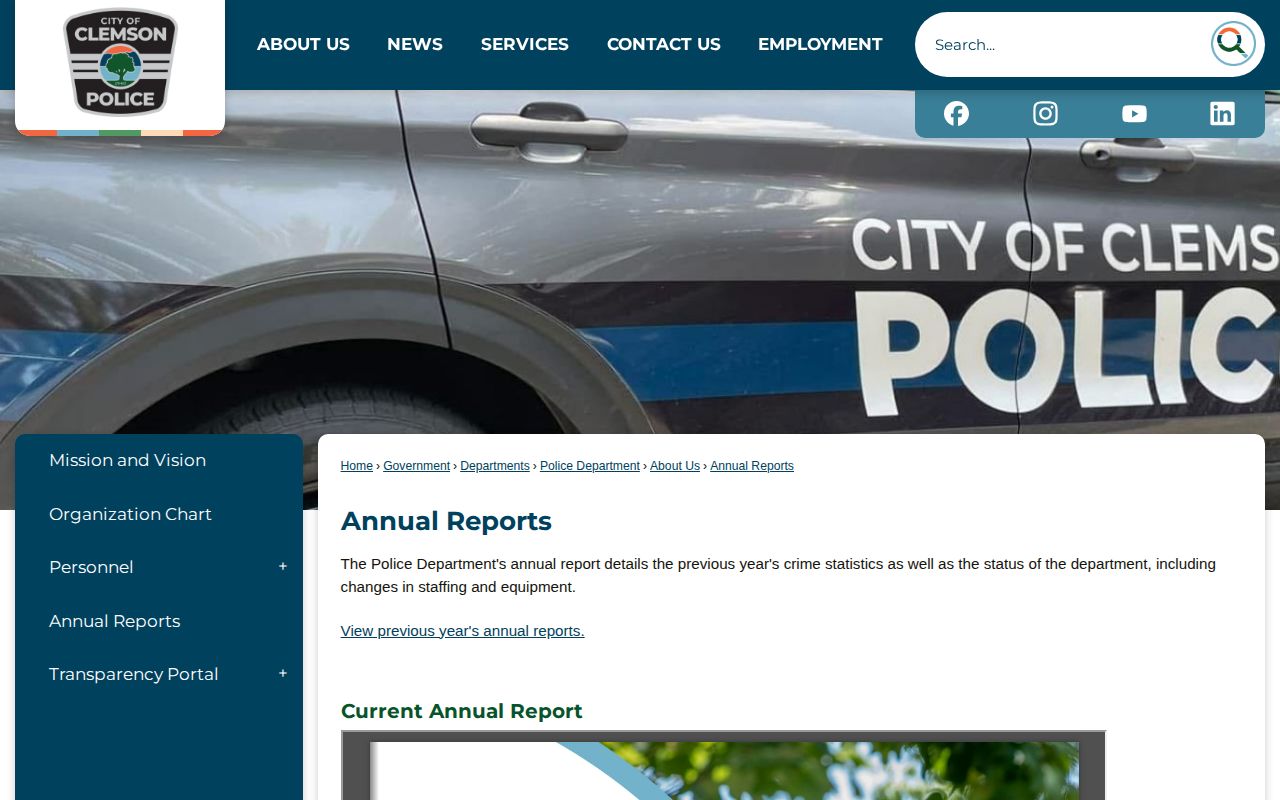
The annual-reports page shows the gap between agency context and a live booking search. Safe Alerts and Rave Guardian are communication tools for campus safety. Neither one holds records. Neither can confirm whether anyone is in custody.
For a campus event, start with the crime report. Its case number, date, time, location, and listed code can steer you to the right agency before a records inquiry. Those fields describe what was reported. Nothing more.
Clemson Busted Arrest Coverage
No verified local paper runs a standing Pickens County booking-photo roster. Narrative reporting fills the space instead. WSNW/94.1 The Lake and the Pickens County Courier cover regional public-safety stories, sometimes quoting a police release or running an agency-supplied image. That is journalism, not an official booking feed. County aggregator sites are secondary archives too. For a real answer, go to the city, campus, county, or court source.
A story catches your eye? Write down two things: the agency named and the date. Those details carry real weight in a records request or an official custody search. The Arrest News page maps these outlets across the county media landscape.
Clemson coverage routinely crosses city and campus lines. A university incident can sit beside a city-police story even though different offices hold the records. Attribution matters. Follow the agency cited in the report. A matching official record, county custody channel, or court file is the only way to answer a status question.
Clemson Arrests Need Court Context
Each source answers a narrow question. A campus crime log, a city records response, a county custody result, and a news report all stop short of a final legal outcome, so none of them should be treated as the last word on a Clemson arrest.
Important: Before relying on any Clemson arrest or booking information, confirm both the agency involved and the court handling the matter.
Keeping these sources straight prevents one common mix-up: treating a county roster, a city detention question, and a campus report as if they described the same custody record.
Public Record Search
Sponsored Results